
Cart is empty
 Books & CD/DVDs
 Orthodox Icons
 Monastic Handiwork
 Ecclesiastical Utensils
 Clothing & Accessories
 Natural Care & Remedies
 Prayer Ropes
 Jewelry
 Incense
 Wines
Wines
 Food
Food
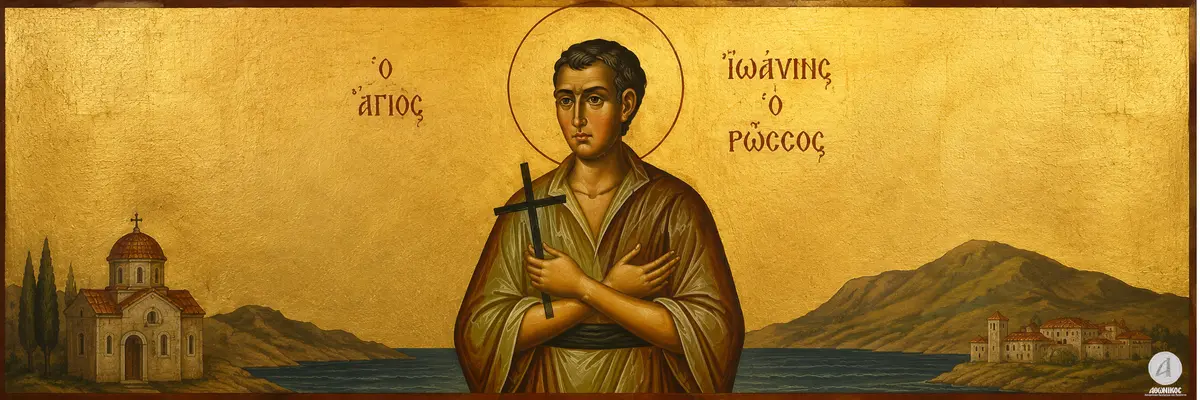
Saint John the Russian: The Hidden Servant Who Conquered Corruption and the Modern Miracles of Patience
The Incorrupt Relic and Universal Contrition
On May 27th, our Orthodox Church celebrates with unparalleled contrition the memory of one of the most beloved, living, and wonderworking Saints of our days: Saint John the Russian. In Prokopi, Euboea, where his most venerable, incorrupt, and fragrant relic rests, thousands of believers flock every year, many of them traveling dozens of kilometers on foot to fulfill a vow.
His holy relic is not merely a religious heirloom; it is a tangible, visible proof of the Resurrection and the victory over death. God chose to glorify with the gift of incorruption a body that spent its entire earthly life in captivity, humiliation, extreme poverty, and absolute obscurity.
Historical and Biographical Context: From the Battlefield to the Submission of the Stable
1. Captivity and the Severe Trial of Faith
Saint John was born in Little Russia (modern-day Ukraine) around 1690 AD to pious parents who made sure to carve a deep love for Christ and the Church into his childhood soul. Upon reaching adulthood, he enlisted as a simple soldier in the tsarist army of Peter the Great. During the terrible Russo-Turkish War (1710–1711), at the battle for the capture of Azov, the young John was captured by the Tatar allies of the Ottomans.
Following the laws of the slave markets of that era, they sold him to a Turkish cavalry officer (Agha) who hailed from Prokopi of Cappadocia in Asia Minor. Arriving there, John was faced with a horrific reality. Captured soldiers endured unspeakable tortures, beatings, and humiliations with a single goal: forced conversion to Islam. Many bent; John, however, remained an unshakable rock.
2. The Stable That Became a Secret "Monastery"
Seeing his indomitable bravery, the Agha softened and ceased the pressure. He assigned the stable of his estate as John's permanent living and working space, putting him in charge of caring for the horses. There, amidst the stench of the animals, the biting cold of the Cappadocian winter, and the mud, the Saint did not despair. On the contrary, he transformed the stable into a secret, heavenly "monastery."
His daily routine was deeply ascetic. By day, he served his master with exemplary industriousness, honesty, and patience, earning the respect of even the local Muslims. By night, however, when everyone else was asleep, the stable was flooded with prayer. Kneeling upon the hay, Saint John made countless prostrations, softly chanted psalms, and fasted strictly, eating only a tiny amount of dry bread. Every Saturday night, he would secretly slip away to the church of Saint George, which was carved into a nearby rock, and at Sunday dawn, he would receive the Holy Mysteries, which the priest hid inside an apple so they would not be noticed by the Turks.
3. The Miracle of the Pilaf and His Holy Dormition
The grace of God dwelling within him began to manifest through wondrous signs while he was still alive. The most famous historical incident occurred when the Agha made his official pilgrimage to Mecca. During his stay there, his wife invited relatives in Prokopi for dinner. When the Agha's favorite dish, pilaf, was served, the hostess said to John, who was serving: "How happy your master would be if he were here to eat this pilaf with us!"
The Saint requested a plate full of the food, saying that he would send it to his master in Mecca. Everyone laughed, thinking that John would eat it himself or give it to the poor. He, however, took the plate to the stable, knelt, and prayed fervently. The plate mysteriously disappeared. When the Agha returned from his journey weeks later, he brought back the copper plate engraved with his household crest, recounting with utter amazement that he found it locked inside his room in Mecca, filled with warm, steaming pilaf!
After years of harsh ascetic struggle and hardships, Saint John felt his end approaching. He fell asleep in the Lord on May 27, 1730, at the young age of just 40, clothed in the innocence and purity of an infant.
Theological Analysis: Patristic Teaching on Incorruption
1. Longsuffering as the Imitation of Christ
The Holy Fathers of our Church emphasize that Saint John's greatest virtue was not the miracles, but his "extreme patience" and longsuffering. In a state of complete deprivation of his freedom, he did not grumble, did not grow angry with God, nor did he hate his persecutors. He perceived his captivity as a spiritual arena.
As Saint John Chrysostom notes regarding servants who attain holiness:
"The free person who is a slave to passions is the real slave, whereas the servant who is free from sin is the only truly free person."
Saint John the Russian was free in his heart because he was united with the Source of Freedom, Christ.
2. The Theology of the Sanctified Body
The fact that his body was found incorrupt and fragrant three years after his burial (in 1733), and even withstood a fire in 1832 when the Turks attempted to burn it (where the faithful saw his body move amidst the flames as if it were alive), confirms the theology of Saint Gregory Palamas on theosis (deification).
Divine Grace is not an abstract concept, but an uncreated energy that permeates the entire human being. When a believer cleanses their heart, the Holy Spirit dwells not only within the soul, but also sanctifies the material body itself, transforming it into a temple of the living God that transcends the laws of natural decay.
Spiritual Messages for Modern Life
Our Own Daily "Stable": In our era, most people constantly complain about their living conditions: the economic crisis, demanding jobs, family difficulties, or the environment they live in. Saint John gives us a resounding answer. One does not need ideal conditions, hesychastic retreats, or riches to find God. Even the darkest, coldest, and most underappreciated space (like a stable) can become a gateway to Paradise, provided we cultivate inner prayer and patience.
The Value of Obscurity: We live in a culture driven by images, self-promotion, social media, and the constant search for human approval. The Saint of patience calls us to a radical turn: toward quiet, inner spiritual work. True, eternal glory is that which God offers to the humble, not the fleeting applause of the world.
The Blessing of Saint John the Russian at Athonian.gr
The Athonite fathers harbor a deep reverence for Saint John the Russian, as his life stands as the perfect example of mental prayer and monastic asceticism practiced within the "marketplace" of the world. The silence, obedience, and unceasing watchfulness (nepsis) of the stable are the very same virtues that live and breathe within the cells of Athos.
For the day of this great, celebratory feast, Athonian.gr recommends fine, authentic monastic handicrafts to enrich your icon corner and strengthen your hours of personal prayer:
Athonite Handicrafts & Prayer Ropes (Chomboskoinia):Knitted knot by knot with the "Jesus Prayer" and unceasing supplication by the fathers of Mount Athos. They serve as the ideal spiritual tool to cultivate patience, spiritual endurance, and mental prayer in our daily life.
Monastic Handmade Incense: Crafted using ancient, traditional Athonite recipes and pure, natural aromatic oils. It releases the sweet, prayerful atmosphere of the churches of Athos, making it ideal for accompanying a supplication service (paraklesis) or your family’s evening prayers.
Authentic Monastic Products &Herbs: Genuine creations of monastic craftsmanship and Athonite nature, made with absolute respect for tradition, transferring the grace, silence, and blessing of the Garden of the Panagia into every Christian home.
We wholeheartedly pray that Saint John the Russian may be an unashamed intercessor, protector, and helper for you and your families, granting health, spiritual endurance in sorrows, and the unshakable peace of Christ in our hearts!
