
Cart is empty
 Books & CD/DVDs
 Orthodox Icons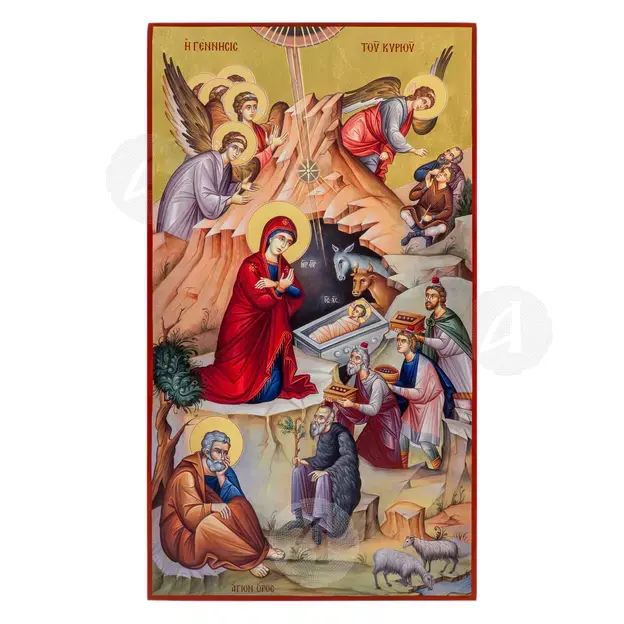
 Monastic Handiwork
 Ecclesiastical Utensils
 Clothing & Accessories
 Natural Care & Remedies
 Prayer Ropes
 Jewelry
 Incense
 Wines
Wines
 Food
Food
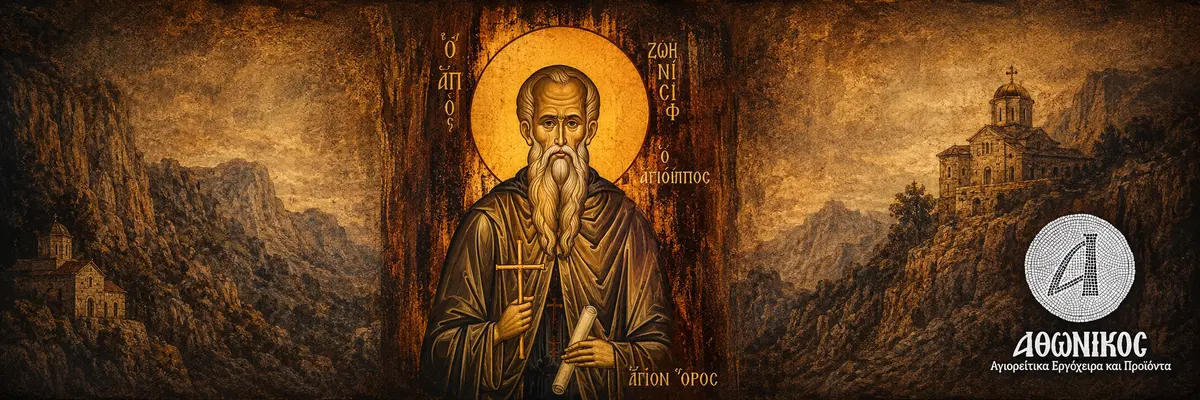
Venerable Athanasius of Athos and Venerable Lampadus: The Beacons of the Desert Celebrated Today
Today, July 5, the Orthodox Church turns its gaze with deepest reverence and compunction toward the desert, stillness, and the grandeur of ascetic life. It is the day we honor the memory of two giants of the spiritual realm: Venerable Athanasius of Athos, the man who indelibly shaped the history and monastic structure of the Holy Mountain, and Venerable Lampadus, a hidden yet brilliant beacon of unceasing prayer.
Their joint commemoration is not merely a historical reminder of the past, but a living, continuous invitation for modern man to seek inner peace, conquer the passions, and ignite their own personal "lamp" of faith amidst the spiritual darkness of our times.
Venerable Athanasius of Athos: The "Founder" and Father of Athonite Monasticism
If Mount Athos stands today as the global capital of Orthodox spirituality and Byzantine tradition, it owes it in immense part to the Saint we celebrate today. Venerable Athanasius of Athos (10th century) was born in Trebizond and received an elite, higher education in Constantinople. Although a brilliant worldly career lay ahead of him, his soul yearned for mystical communion with God. He abandoned everything and fled first to the monasteries of Asia Minor and, later, to the dense and unexplored forests of Athos, seeking absolute solitude.
At that time, Mount Athos was inhabited exclusively by scattered hermits and ascetics living in rudimentary huts, without any central organization. Venerable Athanasius, possessing profound spiritual maturity and backed by the close friendship and financial support of the general, and later emperor,Nikiforos Phokas, introduced a historic reform: in 963 AD, he founded the Holy Monastery of Great Lavra.
This was the very first large, organized cenobitic (communal) monastery on the Holy Mountain. The Saint established rules for common worship, a common dining hall (Trapeza), and shared labor, transforming Mount Athos from a wild wilderness into an organized monastic republic that continues to function under the exact same typikon to this day.
The Appearance of the Virgin Mary and the Miracle of the Spring
The construction of such a massive project was far from easy. Temptations, hardships, and a complete lack of food and resources eventually caused Athanasius to waver. Disheartened, he decided to abandon the Holy Mountain.
As he was walking along the path leading out of Athos, a modest Woman appeared before him. It was the Most Holy Theotokos. When the Saint asked who she was and how she came to be there, She replied that she was the Mother of the Lord. To prove the truth of Her words, She instructed him to strike a nearby rock with his staff. Athanasius obeyed, and from the hard, arid rock, an abundant stream of miraculous holy water immediately gushed forth. This spring flows uninterruptedly to this day and is known to all pilgrims as the “Holy Water of Saint Athanasius.”
The Virgin Mary promised him that he would never have to worry about material goods again, as She Herself would be the “Economissa” (Stewardess) of the Monastery. Filled with repentance and faith, Athanasius returned and completed the monastery.
His falling asleep was sacrificial. While working on the expansion of the church dome, the structure collapsed, crushing the Venerable Father and five other brothers. His holy relics remain to this day the most precious treasure of the Great Lavra, which currently celebrates his feast with magnificent all-night vigils and festive Byzantine chanting.
Venerable Lampadus: The Flame of Hidden and Unceasing Mental Prayer
Alongside the great founder of Athos, our Church honors today a more silent but equally radiant figure: Venerable Lampadus. Although historical sources have preserved very few chronological details regarding his life, his spiritual legacy remains vibrantly alive in the Synaxarion of the Church.
Venerable Lampadus chose the path of absolute obscurity. He lived in ascetic isolation, far from the eyes of the world, defeating passions, weaknesses, and temptations through strict fasting, vigils, and, above all, the unceasing prayer of the heart (the Jesus Prayer).
His name (“Lampadus,” originating from the Greek word for lamp or torch) is deeply symbolic. Through the purification of his heart, the Saint was deemed worthy to receive the abundant grace of the Holy Spirit, transforming himself into a shining lamp of faith. He became a spiritual beacon burning with love for Christ, secretly illuminating the entire creation with his prayers. He teaches us that even in the deepest silence of the desert, a holy life cannot remain hidden; it becomes a light that guides souls toward salvation.
The Spiritual Lesson of July 5 for Our Daily Lives
The coinciding feast of Venerable Athanasius and Venerable Lampadus offers us a great theological lesson: holiness does not take only one form.
It can be expressed through grand, visible works of offering, the building of temples, and the organization of communities (as did Venerable Athanasius).
But it can also be expressed through quiet, hidden, and humble daily spiritual labor in the stillness of our own home or room (as did Venerable Lampadus).
Both paths lead to the very same goal: union with Christ.
As this great day unfolds, it presents the ideal opportunity to turn our gaze to our home iconostasis, light our vigil lamp, and ask these two Saints to grant us a measure of their unshakeable faith and patience.
If you wish to keep a living spiritual connection with the Garden of the Virgin Mary and bring the blessing of this great Athonite feast into your family hearth, we at Athonian.gr have gathered for you:
Byzantine Handmade Icons: Crafted with absolute adherence to Orthodox iconographic tradition, featuring deep prayerful colors and authentic gold leaf.
Authentic Athonite Products and Incense: Made with prayer, fasting, and labor by monks living on Mount Athos, continuing the exact same daily ritual and spiritual heritage left behind by Saint Athanasius more than ten centuries ago.
May Venerable Athanasius of Athos and the wonderworking Lampadus be our constant intercessors before the Throne of God, granting health, spiritual progress, and unshakeable peace to you and your loved ones.
