Cart is empty
 Books & CD/DVDs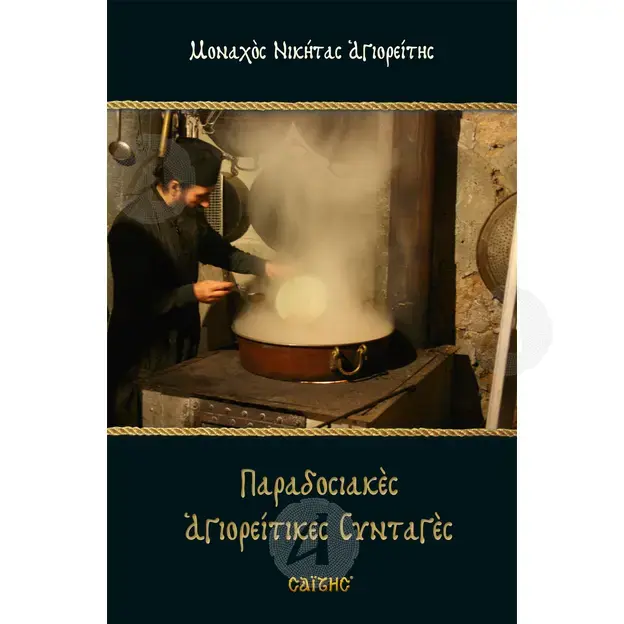
 Orthodox Icons
 Monastic Handiwork
 Ecclesiastical Utensils
 Clothing & Accessories
 Natural Care & Remedies
 Prayer Ropes
 Jewelry
 Incense
 Wines
Wines
 Food
Food
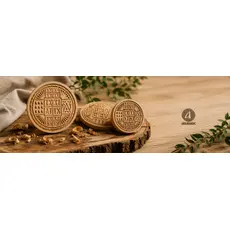
The Prosphora Seal: Breathtaking Theological Meanings and the Secret Language of the Carvings
Every time a believer kneads and offers a prosphora (altar bread) to the Church, they perform an act of deep worship and devotion. When the priest enters the Prothesis (the Table of Oblion) to perform the service of the Proskomide (Preparation of the Gifts), the prosphora becomes the focal point of a sacred preparation. The instrument that defines this entire process is the wooden seal (sphragida).
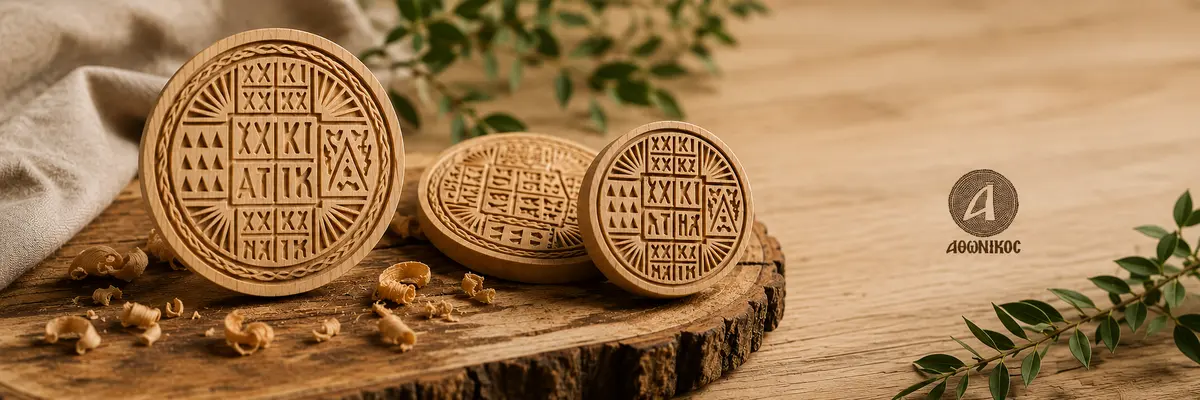
To the untrained eye, the carvings on the prosphora might look like simple geometric shapes and Byzantine letters. In reality, however, the seal constitutes a magnificent theological summary. Every line, every letter, and every square stamped into the dough carries centuries of Orthodox dogmatic teaching.
The Structure of the Prosphora: Two Worlds in One Body
Before decoding the carvings, it is essential to understand the structure of the bread itself. An authentic prosphora is made of two separate round pieces of dough, placed one on top of the other, and stamped together as one.
This double-layered structure symbolizes the two natures ofJesus Christ: His Divine and His Human nature, which united in His person "without confusion and without division." At the same time, it represents the dual composition of man comprising a material body and an immortal soul, as well as the ultimate union of heaven and earth.
Decoding the Carvings of the Seal
The traditional Orthodox seal is circular and divided into specific, mathematically and spiritually structured sections. At the center dominates the Cross, around which the following sacred symbols unfold:
1. The Lamb (IC XC NI KA)
In the central square of the seal (and often repeated in other sections) is a carved Cross, flanked by the Greek letters IC XC / NI KA (Iesous Christos Nika – Jesus Christ Conquers). This specific square section is called "The Lamb" (Amnos).
During the Proskomide, the priest uses the Holy Lance to cut and extract this exact square piece from the bread. This Lamb is placed at the center of the Holy Disk (Diskarion) and is the very portion that, during the Consecration, will be transubstantiated into the Life-Giving Body of our Lord, from which the faithful will receive Holy Communion. It symbolizes the sacrifice of Christ, the "Lamb of God, who takes away the sin of the world."
2. The Portion of the Theotokos (MΘ)
To the left of the central Lamb (the priest's right as he faces the bread), there is a triangular carving with the letters M and Θ (Meter Theou – Mother of God). This triangle symbolizes the Virgin Mary.
The priest extracts a triangular portion from this spot and places it on the Holy Disk to the right of the Lamb, fulfilling the prophetic words of the Psalm: "At Your right hand stands the queen in gold from Ophir, interwoven with various colors." It symbolizes the supreme position that the Theotokos holds in the Church and her continuous intercession for mankind.
3. The Nine Orders (The Enneamerides)
To the right of the central Lamb (the priest's left as he faces the bread), the seal bears a rectangular shape divided into nine smaller squares or triangles. These represent the nine ranks or orders of the Saints in our Church:
The Holy Angels and Archangels.
The Great Hierarchs and Teachers of the Church.
The Venerable and God-bearing Monastic Fathers.
The Holy Unmercenary Healers.
The Holy Ancestors of God, Joachim and Anna, alongside the Saint(s) of the day.
Saint John Chrysostom or Saint Basil the Great (depending on whose Divine Liturgy is being celebrated).
The priest extracts nine small particles from this section, placing them on the opposite side of the Lamb, thereby assembling the entire Church Triumphant around Christ.
The Mystical Assembly Upon the Holy Disk
The ultimate spiritual meaning of the seal is revealed once the priest completes the Proskomide. Upon the metal of the Holy Disk, surrounding the Lamb (Christ), are now placed the portion of the Virgin Mary, the particles of the Saints (the Nine Orders), and at the base, the small particles (crumbs) extracted by the priest as he commemorates the names of both the living and the departed faithful.
There, on that single sacred plate, the entire Church is visually manifested. Christ is at the center, the Virgin Mary and the Saints surround Him, and all of us, living and deceased, are united at His feet. The prosphora seal is the "key" that unlocks this mystical, eternal assembly.
Preserving the Sacred Tradition in the Domestic Church
The prosphora seal is a sacred heirloom for every Christian household. On Mount Athos, monks hand-carve these seals with astonishing detail using woods like pear, boxwood, or linden, which allow the design to print deeply and cleanly without sticking to the dough.
If you wish to revive this blessed tradition of sacred baking in your own home, you will find at Athonian.gr:
Handmade Wooden Prosphora Seals: Hand-carved with continuous prayer by Athonite fathers. Their deep and precise carvings guarantee that the Lamb, the Theotokos, and the Nine Orders will be perfectly imprinted onto your dough, facilitating the priest's sacred task during the Proskomide.
Athonite Recipe and Typikon Books: To learn the spiritual secrets of proper kneading, the right ingredients, and the prayers that must accompany this holy process.
Every time you press the seal firmly into the dough, remember that you are not simply preparing bread; you are participating in the preparatory stage of the greatest Miracle in earthly history: the Holy Eucharist.
