
Cart is empty
 Books & CD/DVDs
 Orthodox Icons
 Monastic Handiwork
 Ecclesiastical Utensils
 Clothing & Accessories
 Natural Care & Remedies
 Prayer Ropes
 Jewelry
 Incense
 Wines
Wines
 Food
Food
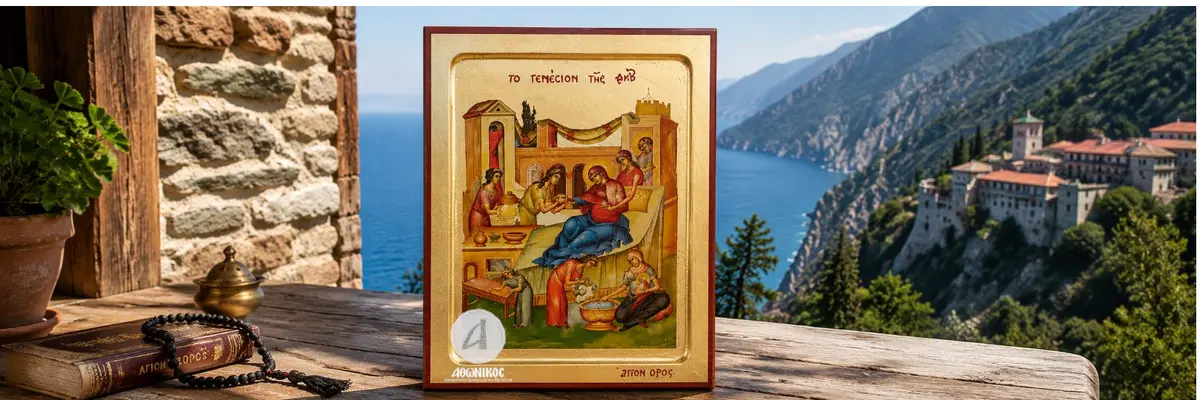
The Nativity of the Theotokos (September 8): Historical Facts, the Dawn of Salvation, and Family Blessings
September 8th holds a place of prominence in the Orthodox Christian calendar, as it is the first major Great Feast of the new ecclesiastical year. This day is dedicated to the Nativity of the Most Holy Theotokos, the birth of the Mother of God, which signifies the dawn of salvation for all mankind.
In a world constantly searching for hope, protection, and family peace, the Feast of the Theotokos reminds us of the power of unwavering faith, patience, and fervent Orthodox prayer.
Historical Sources & Tradition: The Birth of the Virgin Mary in Jerusalem
Although the four Canonical Gospels begin their narrative with the Annunciation to the Theotokos, details regarding the birth and early life of the Virgin Mary have been preserved through the Holy Tradition of the Church and ancient extra-biblical texts, such as the Gospel of James (2nd century AD).
The Location of the Nativity: According to the Church's historical and archaeological tradition, the birth of the Theotokos took place in Jerusalem, near the Probatica Pool (Lion's Gate). The Byzantine Church of St. Anne stands to this day at this site, built over the subterranean home of the Theotokos' parents.
The Lineage of the Parents: Saint Joachim hailed from the tribe of Judah and was a descendant of King David, while Saint Anna was from the tribe of Levi, daughter of the priest Matthan. This lineage fulfilled the Old Testament prophecies that the Messiah would come from both a royal and a priestly line.
The History of the Miraculous Solution to Childlessness
The pious parents of the Theotokos lived an exemplary life, dedicating one-third of their income to the Temple, another third to the poor, and keeping the remainder for themselves. However, they bore the heavy burden of childlessness (barrenness), which in their society was considered a divine curse.
Church tradition records a defining incident: During a major religious festival in Jerusalem, the High Priest Issachar refused to accept Joachim’s offerings, publicly shaming him for not having fathered offspring.
Deeply wounded but steadfast in faith.
Flight into the Wilderness: Joachim did not return home in shame but retreated to the wilderness, where he set up his tent and fasted for 40 days and 40 nights, offering unceasing prayer.
The Lament of Anna: Anna, learning of the insult and the disappearance of her husband, withdrew to her garden. Seeing a bird's nest in a laurel tree, she burst into bitter tears, pleading with God to grant her a child, just as He had done for Sarah and for Hannah, the mother of the Prophet Samuel.
The Annunciation to the Theopatores: An Angel of the Lord appeared simultaneously to both, announcing that their prayer had been heard. Their meeting at the Golden Gate of Jerusalem sealed the divine promise, which led to the birth of Mary.
Historical Establishment of the Feast & Patristic Theology
The celebration of the Nativity of the Theotokos began to be established throughout the Christian East during the 5th century AD, immediately following the Third Ecumenical Council of Ephesus (431 AD), which dogmatically affirmed the title "Theotokos" (Birth-giver of God).
Great Church Fathers, such as Saint John of Damascus and Saint Andrew of Crete, delivered brilliant homilies (sermons) for this day. Saint John of Damascus emphasizes that the birth of Mary is "the beginning of universal salvation," because through the barrenness of her parents, the "living book" that would contain the Uncontained God blossomed forth.
Spiritual Messages for Modern Life
The Feast of September 8th offers timeless guidance for our daily lives:
Patience in Trials: The long-suffering trial of the Holy Ancestors of God, Joachim and Anna, teaches us that God allows difficulties so that His miracle may be revealed later with greater glory.
Hope Where All Seems Impossible: Just as the barren womb of Anna blossomed into the most glorious flower of humanity, so too can faith transform the impasses in our own spiritual or worldly struggles.
The Theotokos as Protection and Refuge: The Garden of the Theotokos, Mount Athos, has maintained an unbroken tradition of ceaseless prayer to her for centuries, offering spiritual refuge to every believer.
Athonian.gr: Authentic Athonite Products & Blessings
To honor the Great Feast of the Nativity of the Theotokos and to bring the blessing of the Virgin Mary into your home and family, we recommend authentic monastic products from Athonian.gr:
Athonite Icons of the Virgin Mary: Discover handcrafted Byzantine icons of the Theotokos (such as Panagia Axion Esti,Gerontissa,Portaitissa) meticulously crafted with gold leaf and natural wood by Athonite monks.
Icons of Saints Joachim & Anna: Authentic icons of the Holy Ancestors of God (Theopatores), an ideal spiritual blessing for newlyweds, families, and couples praying for the gift of children.
Monastic Vigil Lamps & Incense: Pure beeswax candles, premium Athonite incense (moschothymiama) of exceptional quality, and vigil lamps (kandilia) for your home prayer corner (icon corner).
Authentic Mount Athos Prayer Ropes (Komboskini): Knotted with unceasing prayer on the Holy Mountain, to accompany you in every moment of spiritual focus.
A blessed and joyful feast to all! May the Most Holy Theotokos intercede for, protect, and bestow health and peace upon every home.
